
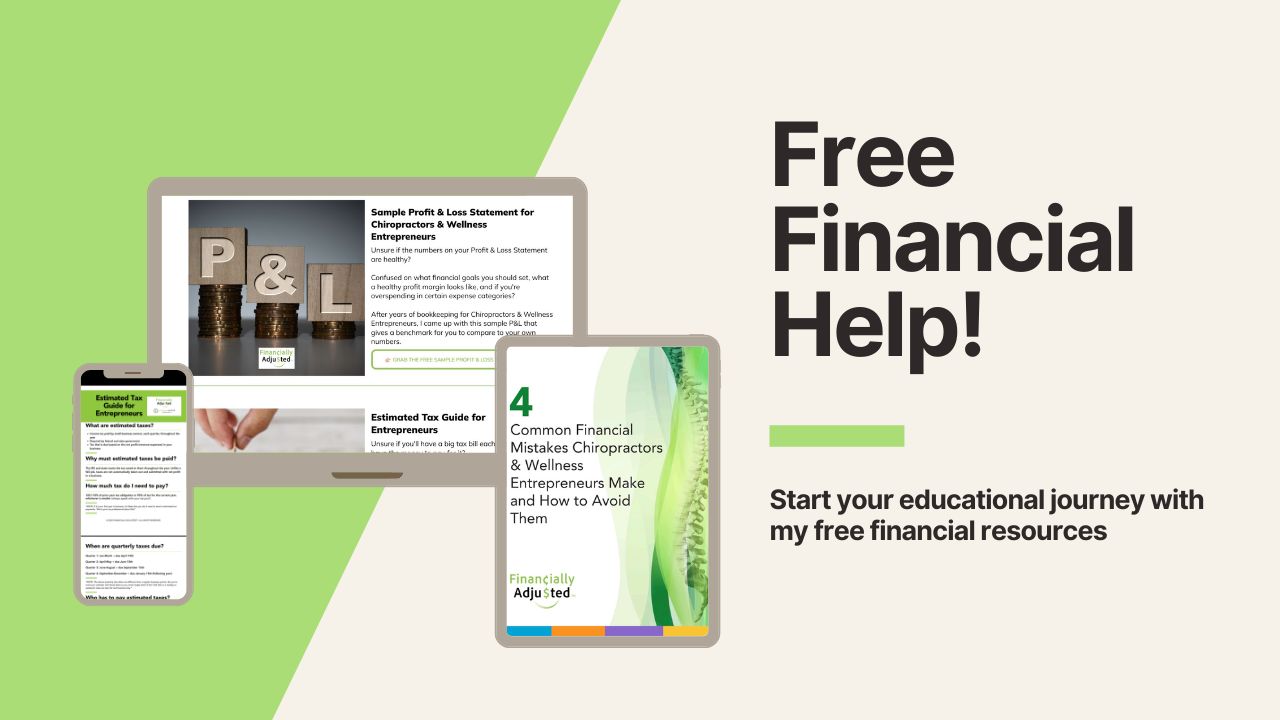
Free Resources
Start your educational journey with my free financial resources. Get guidance on mistakes to avoid, what a healthy P&L looks like, and more...
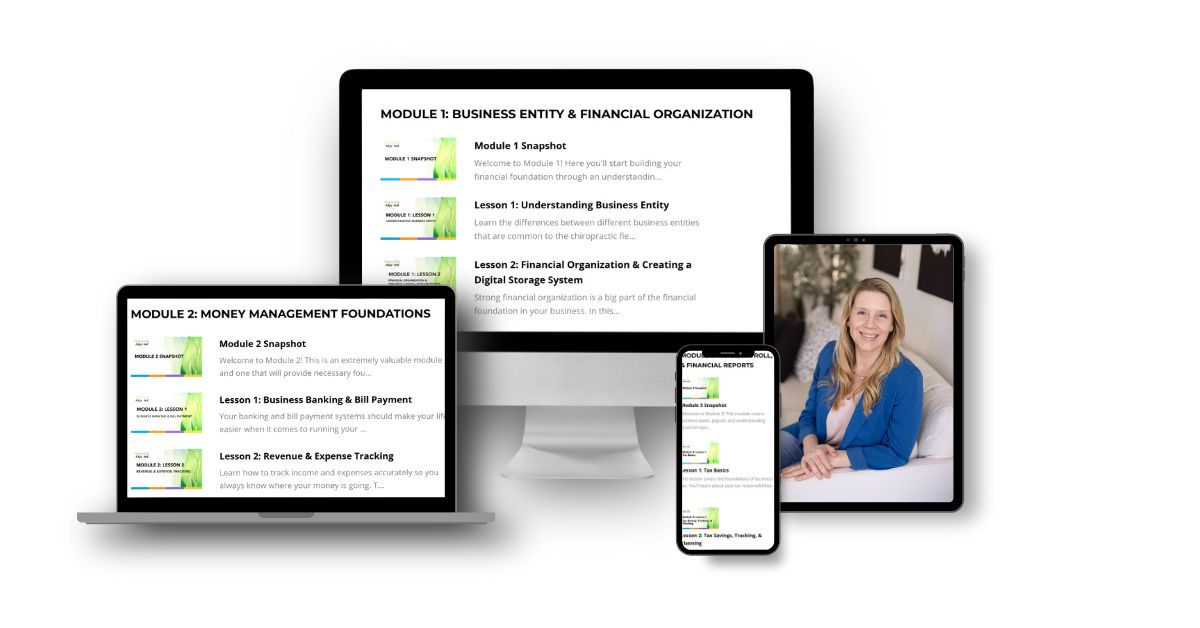
Self-Paced Courses
Practical financial education & tools that you can implement immediately, at your own pace, on your own schedule, and without breaking the bank.
Read the blog to help lift the financial fog...

#1: Start Smart in Your Business
FINANCIALLY ADJUSTED BLOG POST #1
Today's blog post is geared toward the new entrepreneur, someone who's getting ready to start a business and has all the questions associated with that. If you're new to business or just at the very beginning stages, it’s likely you've had a whole bunch of questions pop up like: “What type of business am I starting?”, “What tools do I need to use to manage everything?”, and “Who do I need to think about talking to get some help?” We’re going to cover all of that today. I've come up with 5 key actions or decisions that I think are crucial in the beginning stages of your business journey. So, let's dive right in.
1. Choosing Your Entity Type
One of the first things you need to decide is the type of entity your business will be. This decision is foundational because it impacts many aspects of your business, from obtaining a bank account to legal protections.
Sole Proprietorship
If you're starting a simple business, perhaps as a side hustle, you don't necessarily need to form an LLC right away. You can operate as a sole proprietor using your Social Security number. This means you'll file your taxes using your personal tax return, with a schedule that includes all your business information.
DBA (Doing Business As)
If you want to operate under a different name than your own, you can file for a DBA (Doing Business As). Services like LegalZoom make this process easy and affordable, usually costing around $100.
LLC (Limited Liability Company)
An LLC separates your personal assets from your business assets, offering legal protection. If your business gets sued, only your business assets are at risk. You can form an LLC online through services like LegalZoom for a few hundred dollars.
Partnerships
If you're entering into a partnership, it's crucial to have a clear agreement on paper detailing each partner's ownership and responsibilities. Consult with a legal professional to set this up correctly.
S-Corporation
An S-Corporation is a tax designation rather than a legal entity. If you start as an LLC, you can elect to be taxed as an S-Corp later, which can save on payroll taxes. Discuss this option with your CPA to determine if it’s right for you. Many chiropractic businesses end up being taxed as an S-corp but this is definitely a decision you want to get guidance on from a tax pro.
2. Managing Startup Costs
When starting a business, you'll likely incur various startup costs before generating any revenue. It's important to track all these expenses meticulously.
Tracking Expenses
Keep a spreadsheet detailing every purchase related to your business, including the date, amount, vendor, and a brief description. This documentation will be crucial for tax deductions.
Deducting Expenses
Even if your business isn't profitable initially, you can deduct these expenses from your taxable income, reducing your overall tax burden. Keep all receipts and organize them in a dedicated folder, either digitally or physically.
3. Creating a Budget
Budgeting is vital for both your personal and business finances.
Personal Budget
Start with your personal budget to understand how much you need to live on and how much you can invest in your business. If you have a spouse, discuss your new business venture and its financial implications with them.
Business Budget
Create projections for your business income and expenses. This can be as simple as writing it down on a notepad or using an app like EveryDollar by Ramsey Solutions. Accurate budgeting helps you navigate your financial goals and ensures you're prepared for future expenses.
Avoiding Debt
Avoid starting your business with debt if possible. If you must, ensure you have a clear repayment plan and understand the impact on your personal finances.
4. Setting Up Financial Tools and Systems
Business Bank Account
Once your business entity is set up, open a dedicated business bank account. This helps keep personal and business finances separate, which is crucial for legal protection and clean bookkeeping.
Accounting Software
Invest in a cloud-based accounting system like QuickBooks Online. It helps track all your financial data from the start, making it easier to run reports and see trends over time. I recommend starting with this tool from day one to avoid future headaches.
Ready to sign up for QuickBooks Online? You can click here!
Business Credit Card
Consider getting a business credit card for expenses, but only if you can manage it responsibly. Ensure the credit card integrates with your accounting software for seamless tracking.
My favorite credit cards for businesses to earn great cash back are the Chase Ink Card and the Capital One Spark Card.
Payroll Processing
If you have employees, including yourself if you're an S-Corp, you’ll need a payroll processing company. I recommend ADP or Gusto for their user-friendly dashboard and excellent customer service.
5. Hiring Professionals
Legal and Tax Professionals
Consulting with legal and tax professionals when starting your business is crucial. They can help you choose the right business structure, set up proper agreements, and ensure you’re compliant with tax regulations.
Bookkeepers
Consider hiring a bookkeeper to manage your financial records accurately. This is particularly important if bookkeeping isn’t your strong suit.
By following these key actions and decisions, you'll set a strong foundation for your new business. Remember, every business is unique, so tailor these recommendations to fit your specific needs. Good luck with your entrepreneurial journey!
In health and wealth,
Leslie

*Disclaimer: This content is for educational and informational purposes only. Please consult with an accounting professional for direct advice based on your specific business situation.

What My Clients Have to Say:
My clients are at the heart of everything I do. In my bookkeeping business (Leading Ledger Bookkeeping) and with Financially Adjusted, my goal is to help Chiropractors & Wellness Practitioners understand their business finances better and gain control of their money. It's no fun being in the dark with finances. I'd be honored to help you get financially adjusted!
Dr. Josh H.
Leslie is truly amazing! She is responsive, professional, and provides personalized services that went above and beyond our expectations over the last year+. We have had several bookkeepers for our business in the past and Leslie is by far the BEST we have ever worked with! I highly, highly recommend her bookkeeping services!
Dr. Stacie B.
Leslie is THE BEST! She has made looking at my business financials so easy. She is quick to respond and has exceeded all expectations! I couldn't imagine running my business without her. I highly, highly recommend her for all your bookkeeping needs.
Dr. Allen M.
Leslie is the best of the best! She will make you feel like tax season is a piece of cake. As a Chiropractic business owner I used to do all my own bookkeeping, and it was always a very stressful thing to do. I always had so many questions and was confused about whether or not I was doing things right. With Leslie, all that stress has gone away and I can trust I am in good hands. She's amazing! Highly recommend!
Dr. Tracey C.
She really has helped me manage my business in a way that gives me confidence as I grow and plan for the future. Highly recommend!
© 2026 Financially Adjusted - All Rights Reserved.